- +256 701 819 223
- Najjanankumbi Entebbe Rd
- gorillasafarisafrica@gmail.com

Services
Contact Info
+256 774 819 223
Call or Chat with us
Info File
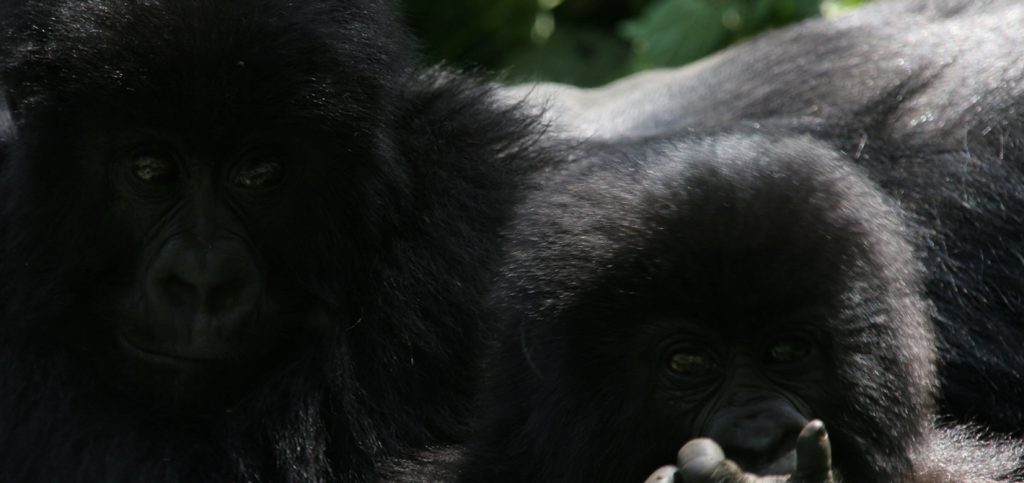
Best Time to Go Gorilla Trekking in Rwanda and Uganda: Gorilla trekking stands out as an exceptional wildlife experience, providing visitors with a unique opportunity to observe the endangered mountain gorillas in their natural environment. This unique adventure features walking through vibrant tropical rainforests, exploring steep hills, and journeying across beautiful mountainous terrains with the guidance of skilled rangers and trackers. Gorilla trekking primarily occurs in East and Central Africa, particularly in Rwanda, Uganda, and the Democratic Republic of Congo. Nevertheless, Rwanda and Uganda continue to be the most sought-after and reliable locations for this transformative journey.
Mountain Gorillas: Mountain gorillas belong to the Eastern gorilla species and have approximately 98% of their DNA in common with humans. These lovely creatures live in high-altitude tropical forests and mainly enjoy munching on leaves, shoots, stems, fruits, and bamboo. Gorilla trekking offers a wonderful chance for visitors to see these gentle giants as they feed, groom each other, play, rest, and interact with their families in their natural habitat. Trekking is carefully regulated to ensure the protection and conservation of mountain gorillas, who are critically endangered.
While gorilla trekking is possible year-round, selecting the optimal time for your visit significantly enhances the overall experience. Weather conditions affect trail accessibility, hiking difficulty, visibility, photography opportunities, and the number of visitors. Rwanda and Uganda each have unique dry and wet seasons, with every season presenting various benefits and challenges for gorilla trekking
Bwindi Impenetrable National Park, situated in southwestern Uganda, spans an area of 331 square kilometers. This location hosts almost fifty percent of the global mountain gorilla population that remains and is recognized as a UNESCO World Heritage Site. The park consists of four primary trekking sectors: Buhoma, Ruhija, Rushaga, and Nkuringo.
Mgahinga Gorilla National Park, located in the southwestern corner of Uganda, is the smallest national park in the country, beautifully set on the slopes of the Virunga Mountains. The park is home to the Nyakagezi Gorilla Family and provides a lovely sanctuary for golden monkeys and a variety of bird species.
Volcanoes National Park in Rwanda
Volcanoes National Park, found in the beautiful north-western region of Rwanda, covers around 160 square kilometers. This park is home to a remarkable population of the remaining mountain gorillas and is one of the important conservation areas for gorillas in Africa. The Park is located in the Virunga Conservation Area and stretches along the beautiful slopes of the Virunga Mountain range. The park is home to five stunning volcanic mountains: Mount Karisimbi, Mount Bisoke, Mount Muhabura, Mount Gahinga, and Mount Sabyinyo, creating a beautiful and captivating landscape for everyone to enjoy.
Understanding the Seasons in Rwanda and Uganda
Rwanda and Uganda share comparable climatic patterns because of their proximity to the equator. Each year, both countries undergo two dry seasons and two wet seasons. The Dry Season runs from June to September and December to February. The Wet Season runs from March to May and October to November
The dry seasons are often regarded as the ideal time for gorilla trekking, whereas the wet seasons present unique advantages for travellers looking for smaller crowds and reduced expenses.
The Best Time for Gorilla Trekking
The dry season June to September
The extended dry season, spanning from June to September, is regarded as the prime and most advisable period for gorilla trekking in Rwanda and Uganda. This time of the year features minimal rainfall, resulting in drier forest trails that are less slippery, thus facilitating easier hiking through the dense vegetation.
Trekking demands less physical effort during the dry season due to the improved condition of the trails. This holds significant importance in parks such as Bwindi Impenetrable National Park, where the landscape is rugged and the foliage is dense. Decreased rainfall results in less mud, a reduction in leeches, and enhanced comfort throughout the trek.
The dry season offers enhanced visibility as a significant benefit. The mornings are now clearer, with reduced fog, enabling trekkers to appreciate the stunning views of the Virunga Volcanoes and the surrounding landscapes. The conditions for photography are outstanding, featuring improved lighting and minimal interference from mist or rain.
This season marks the height of tourism, leading to a swift sell-out of gorilla trekking permits and accommodations. It is highly recommended for travellers to secure permits well in advance, ideally several months ahead of time.
December to February
The shortest dry season occurring from December to February presents an outstanding opportunity for gorilla trekking. This time of year is a bit warmer, yet the conditions remain favourable, featuring less rainfall and easily navigable trekking paths.
This season is perfect for travellers seeking pleasant weather with a more peaceful atmosphere than the busier June to September months. The holiday season is particularly favoured by travellers, especially in Rwanda, thanks to the convenient access to Volcanoes National Park from Kigali.
An Alternative Gorilla Trekking Experience
The Wet Season March to May
The long rainy season is regarded as the most difficult period for gorilla trekking. Intense rainfall renders forest trails muddy, slippery, and challenging to navigate. The steep slopes in Bwindi and Mgahinga present greater challenges for navigation, resulting in longer treks.
However, the wet season presents distinct benefits as well. The forests are vibrant, verdant, and remarkably stunning, providing an authentic jungle experience. During this period, there are fewer tourists, leading to more tranquil treks and a unique opportunity to engage with the gorillas.
Accommodation rates tend to be more affordable, and acquiring permits is less complicated. This season offers rewarding experiences for both adventurous travellers and budget-conscious visitors.
October to November
This is the short rainy season and is milder in comparison to March–May. Gorilla trekking remains entirely feasible, with rainfall typically occurring intermittently rather than continuously.
The parks are not as busy, and the visibility remains quite decent. Numerous seasoned travellers view this as an excellent balance between advantageous conditions and fewer visitors.
Best Time for Gorilla Photography
The dry season offers optimal conditions for photography, featuring improved lighting, reduced fog, and minimal rainfall. Bright skies enable photographers to seize crisp images of gorillas and their natural surroundings. In the wet season, photography remains feasible, though it may be influenced by rain and reduced lighting conditions.
Best Time for Budget Travelers
Budget travellers might find the wet season more appealing, particularly from March to May and October to November. At this time, lodges provide reduced rates, and obtaining permits is more straightforward. While the trekking conditions may be more challenging, the encounter with the gorillas is equally fulfilling.
Gorilla Trekking Packing List
- Long-sleeved shirts to protect your arms from scratches, insects, and thorny vegetation
- Long trousers – provide protection from nettles, insects, and mud
- Warm jacket or fleece – mornings in the forest can be cold
- Waterproof rain jacket or poncho – rain can occur at any time
- Waterproof trekking trousers – useful during wet or muddy conditions
- Warm socks – help keep your feet dry and comfortable
- Sturdy hiking or trekking boots – offer good grip and ankle support on slippery trails
- Gloves – protect your hands while holding branches or pushing through vegetation
- Hat or cap – protects you from sun or light rain
- Sunglasses – shield your eyes from sun glare
- Small backpack – to carry water, snacks, and personal items
- Insect repellent – protects against mosquitoes and forest insects
- Sunscreen – protects your skin from sun exposure
- Hand sanitizer or wet wipes – for hygiene during and after the trek
- Face mask – required when in close proximity to gorillas