

Top Primate Safari Destinations In Africa
Top Primate Safari Destinations In Africa.
Top Primate Safari Destinations In Africa ,Africa is the only continent that offers the worlds most extra ordinary primate experiences, imagine walking through foggy mountain woods to see gorillas in the wild, stare at a monkey swinging effortlessly from the canopy, or see a sifaka leap between baobabs. For wildlife enthusiasts, a primate safari in Africa provides intimate and profound interactions with our closest evolutionary relatives in their native habitat.
From Uganda’s and Rwanda’s rainforests to Madagascar’s biodiversity hotspots, in this guide we have covered s the best places to observe gorillas, chimps, lemurs, and unusual monkeys. We have provided vast information on where to go, what to anticipate, and how to travel responsibly while supporting important conservation efforts.
Why do a Primate Safari?
Primate safaris provide close-up, immersive encounters that appeal to all of your senses, unlike the normal safaris that concentrate on the Big 5. Primate safari lead you into isolated forests under the guidance of knowledgeable trackers as you enjoy sounds of rustling leaves before coming across a gorilla or chimpanzee family. There is nothing great in Africa like embarking on a primate safari.
Top reasons for carrying out a primate safari
Deep connections with the closest relatives: This is one of the top reasons why people engage in primate safaris. Primates have notable genetic and behavioural similarities with humans thus creating powerful connections while viewing them.
Conservation with purpose: Taking part in a primate safari, you are directly supporting conservation efforts and local communities. Please note that a certain portion of the gorilla permit goes to protection of these endangered species, preserve critical habitats, and provide sustainable livelihoods for people living near protected areas.
Unique and diverse landscapes: Africa is a lively home of stunning environments that are encompassed with misty rainforests, bamboo forests, volcanic mountains, and tropical jungles thus creating a different scenery from traditional savannah safaris.
BEST PRIMATE SAFARI DESTINATIONS IN AFRICA.
BWINDI IMPENETRABLE NATIONAL PARK: One of the most significant top primate (gorilla)trekking habitats in the world is the Bwindi Impenetrable forest that lies in the southwest corner of Uganda. Being inscribed on the UNESCO World Heritage Site the park is a treasure trove of attractions, nearly half of the worlds population of gorillas call this place home.
What are your expectations of trekking gorillas in Bwindi Np?
Bwindi has 4 trekking stations that is Ruhija, Buhoma, Nkuringo and Rushaga. Depending on the sector that your permit reads, you will rise up early in the morning, drive with your guide to the park headquarters for a briefing. The briefing entails the perfect conduct on how to spend with the gorillas.
Once you have found them, you will spend an amazing hour watching how they communicate with one another, forage, and even play.
Basic details to know:
Permit fees: The gorilla permit cost: $800 for foreign non residents.
Trek duration: 2–6 hours depending on gorilla location
Best time to visit: Dry season, June–August and December–February
Bwindi impenetrable national park also offers gorilla habituation safaris where you spend almost 4 hours with the gorillas. Gorilla habituation is done from Rushaga sector of Bwindi.
Responsible travel tip: Select eco-lodges and local guides that contribute to gorilla conservation and community development.
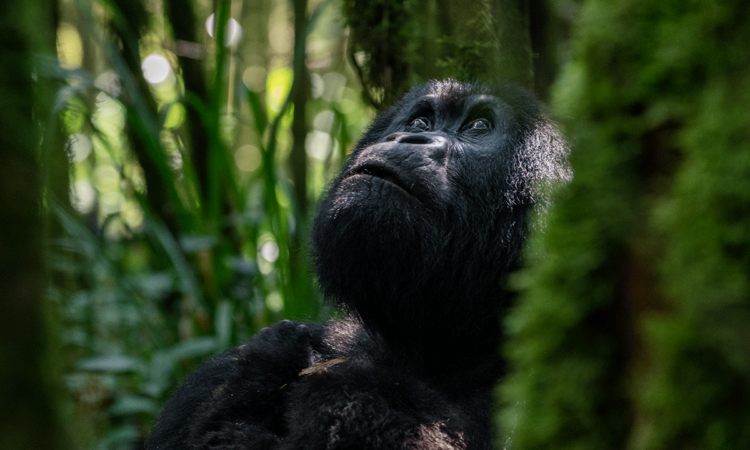
VOLCANOES NATIONAL PARK: This is one of the ultimate luxurious gorilla trekking destinations with in Africa. The park is very accessible just 2 hours from Rwanda’s capital city Kigali and famously known for the American primatologist Dian Fossey’s research and remains. She spent all the time conserving and protecting gorillas.
What are your expectations of trekking gorillas in volcanoes Np?
Volcanoes national park is the only gorilla trekking habitat in Rwanda. You will rise up early in the morning, drive with your guide to the park headquarters in Kinigi. for a briefing. The briefing entails a highlight of a perfect conduct on how to spend with the gorillas.
Once you have found them, you will spend an amazing hour watching how they communicate with one another, forage, and even play.
Basic details to know:
Permit fees: The gorilla permit cost: $ 1500 for foreign non residents.
Trek duration: 2to 6 hours depending on gorilla location.
Best time to visit: Dry season, June–August and December–February.
KIBALE NATIONAL PARK: Often dubbed as the “primate capital of the world, “Kibale Forest national park is a home to rich concentration of primate species with 1,500 chimpanzees, plenty or bird and monkey species.
The park’s lush tropical rainforest serves as a great place for fascinating treks, allowing visitors to observe chimps in their natural habitat through assistance from trained and competent rangers.
What to expect on a chimp trek in Kibale national park?
Chimpanzee trekking can be done in two sessions that is the morning and afternoon setion. It begins with a briefing about the perfect conduct to behave while you are with the chimpanzees.
Once you have found them, you will spend an amazing hour watching how they communicate with one another, forage, and even play.
Basic details to know:
Permit fees: The gorilla permit cost: $ 250 for foreign non residents.
Trek duration: 2to 6 hours depending on the chimpanzee’s location.
Best time to visit: Dry season, June–August and December–February.
MAHALE MOUNTAINS NATIONAL PARK: The park is located on the eastern shores of Lake Tanganyika in western Tanzania and is one of Africa’s remote and pristine area for chimpanzee trekking adventures.
The park is totally diverse with around 900–1,000 wild chimpanzees fully habituated, and other primates to view include colobus and red-tailed monkeys, as well as a rich diversity of birds, mammals, and aquatic life.
What to expect on a chimp trek in Mahale Mountains National Park?
Chimpanzee trekking typically commences early in the morning with a briefing by experienced guides who explain safety protocols to follow while you are with the chimp chimpanzees. Once you have found them, you will spend an amazing hour watching how they communicate with one another, forage, and even play.
Basic details to know:
Permit & fees: A chimpanzee permit costs around $ 150 per person together with an addition of park entrances of $ 80.
Duration of the trek: It takes 3hrs to 30 minutes depending on the location of the chimpanzees.
Size of the group: A group of (around 6 people) per trek to minimize disturbance to the animals.
Best time to visit: Dry season, June–August and December–February.
MGAHINGA NATIONAL PARK.
Nestled in the foggy Virunga Mountains, Mgahinga National Park is one of Africa’s most fascinating places to go primates trekking safaris. This park is full of wonder and breathtaking beauty despite its modest size. The park is basically referred to as where gold meets silver due to its presence of both gorillas and golden monkeys.
What to expect on a gorilla trek in Mgahinga National Park?
Gorilla trekking typically commences early in the morning with a briefing by experienced guides who explain safety protocols to follow while you are with the gorillas. Once you have found them, you will spend an amazing hour watching how they communicate with one another, forage, and even play.
Basic details to know:
Permit & fees: A gorilla permit costs $ 800 for foreign non residents.
Duration of the trek: 2 to 6 hours depending on the location of the gorillas.
Size of the group: A group of (8 people) per trek to minimize disturbance to the animals.
Best time to visit: Dry season, June–August and December–February.
NYUNGWE FOREST NATIONAL PARK: One of the best places to go primate trekking is Nyungwe National Park, which is located high in the mountains of Rwanda’s southwest. The park, which is one of Africa’s oldest rain forests, is home to more than 13 different species of primates, including more than 500 chimpanzees and massive colobus monkey troops.
What to expect on a chimp trek in Nyungwe National Park?
Chimpanzee trekking typically commences early in the morning with a briefing by experienced guides who explain safety protocols to follow while you are with the gorillas. Once you have found them, you will spend an amazing hour watching how they communicate with one another, forage, and even play.
Basic details to know:
Permit & fees: A chimpanzee permit costs $ 250 for foreign non residents.
Duration of the trek: 2 to 6 hours depending on the location of the gorillas.
Size of the group: A group of (8 people) per trek to minimize disturbance to the animals.
Best time to visit: Dry season, June–August and December–February
LEMUR SAFARIS IN MADAGASCAR.
Madagascar is a primate lover’s paradise because it’s the only site on Earth where you can view lemurs in the wild, with over 100 species that are unique. Each location has its own cast of characters, ranging from nocturnal mouse lemurs to dancing sifakas.
Top places to see lemurs in Madagascar:
Berenty reserve South Madagascar, excellent for sifaka and ring-tailed lemurs
Andasibe Mantadia national park: The park is perfect for indri, the largest lemur species with haunting calls
Kirindy forest reserve: The place harbours fossa, red-fronted lemur, and giant jumping rat.
VIRUNGA NATIONAL PARK
One of Africa’s oldest national parks is Virunga National Park, which is situated in the eastern Democratic Republic of the Congo. The park is one of the top primate safari destinations residing over mountain gorillas and is among the most biologically varied protected regions on the continent.
Basic details to know:
Permit & fees: A gorilla permit costs $ 400 for foreign non residents.
Duration of the trek: 2 to 6 hours depending on the location of the gorillas.
Size of the group: A group of (8 people) per trek to minimize disturbance to the animals.
Best time to visit: Dry season, June–August and December–February
LOANGO NATIONAL PARK
Loango National Park in Gabon is home to untamed Atlantic beaches, deep rainforest and a unique primate safari destination. A unique variety of creatures, including as chimpanzees, red-capped mangabeys, western lowland gorillas, and even surfing hippos, can be found in this unspoiled environment.
Unique experiences in Loango:
Trackking chimps and gorillas: With scientists from the Max Planck Institute
Wildlife photography: Expect to see buffalos and elephants crossing beaches at dawn
Low visitor numbers: Explore pristine habitat in near solitude.
GOMBE STREAM NATIONAL PARK.
Gombe Stream National Park, Tanzania’s smallest national park, is tucked away along the shores of Lake Tanganyika and is well-known for Jane Goodall’s pioneering research. This is where the world first discovered that chimpanzees develop sophisticated civilizations, use tools, and grieve.
Why Gombe is iconic:
Historical significance: The origin of the study of ape behaviour
Small group encounters: Limited tourists make for intimate tracking
Stunning setting: Hillside forests with lake views
TSINGY DE BEMARAHA NP.
Tsingy de Bemaraha National Park, located in western Madagascar, is home to a diverse range of primates. The park is one of Africa’s premier primate trekking destinations. The park’s spectacular attractions include lime stone formations, uncommon wildlife species, hidden grottos, and razor-edged ridges.
The park is both a geological wonder and a spiritual experience in the heart of Madagascar, leaving you with lasting impressions.
Why Tsingy de Bemaraha np iconic?
Best for: Lemur spotting and dramatic landscapes
Other wildlife: Fossa (a cat-like predator), chameleons, rare birds
Activities: Lemur trekking, rock climbing, cave exploration, canopy walks, birdwatching and many more.
Tiwai Island, Sierra Leone
Tiwai Island Wildlife Sanctuary in Sierra Leone, West Africa, provides a less well-known but extremely gratifying primate experience. This little forested island on the Moa River is home to over 11 primate species, including the endangered red colobus, Diana monkeys, and spot-nosed monkeys.
Why visit Tiwai:
Community-run sanctuary: Local ownership makes this a powerful model for eco-tourism
Primate diversity: High primate density in a small area
Accessible rainforest: Easy trails, canoe safaris, and wildlife research opportunities.
How to Choose the Right Primate Safari?
Each primate destination offers something unique. To decide where to go, consider:
Know the exact type of animals you need to see: This includes selecting appropriate type of safari for example Gorillas can be seen in Uganda/Rwanda, chimps in Uganda/Tanzania/Gabon then Lemurs in Madagascar
Budget: Depending on your wallet you will either select gorilla trekking either in Uganda or Rwanda.
Add-ons: please note that these safaris can be combined with other forms of safaris such as the Big 5, hiking or culturally based?
Pro tip: Secure your permits early especially for gorilla trekking in high season, as spaces are limited and regulated.
Responsible Primate Tourism Tips
Here are some of the best practices to follow for a responsible primate tourism experience.
Please use certified guides: Track only with park rangers or certified tour providers, such as Gorilla Safaris Africa.
Keep your distance: Always maintain a minimum distance of 7 meters from gorillas and chimps.
Don’t visit when you are sick: Never visit the primates when you have an illness can be deadly to great apes.
Support local communities: Kindly select community-based lodges and services
No flash photography: during the process of taking photos do not turn on your flash light since It disturbs the animals and violates park rules